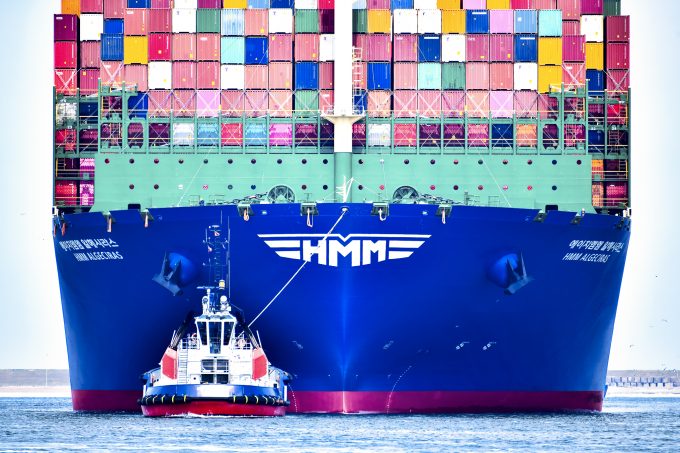





Tariffs, costs and politics are breaking the global model and upgrading regional ecosystems
Read also: Circular supply chains: how sustainability is redefining global logistics
For decades, companies have fine-tuned their supply chains for maximum efficiency. The rules of the game were simple: manufacture where costs were lower, ocean shipping, confidence in predictable tariffs and fixed transportation costs.
This model is no longer applicable. Tariffs, inflation, and geopolitical turmoil have broken the logic of the global supply chain. Instead of creating a single global supply chain that spans continents, companies are now building regional hubs.
This transformation is not limited to where goods are manufactured. It’s reshaping what products end up on shelves, their price, and whether consumers can find them at all. Retail is here, and it is redefining competitive advantage for retailers and manufacturers alike.
Definitions as a strategic variable
Tariffs were once background noise, factored into procurement but rarely treated as a key input to supply chain planning. Today, they can change class economics overnight. A sudden increase in fees doesn’t just add a few points to your costs; They can turn profitable formations into liabilities or close entire market segments.
This is why companies raise definitions from a financial item to a strategic planning variable.
One of the most common approaches is tariff engineering: modifying the form, origin, or label of a product to reduce tariffs. Some companies shift final assembly to tariff-friendly zones so that a product produced largely in one country undergoes final assembly steps elsewhere to qualify for lower tariffs. Others are seeking acquisitions or partnerships in low-tariff markets to create alternative supply paths. Still others reformulate products, substituting ingredients or components to move into more appropriate definitional categories.
Examples can be simple but their impact is powerful. For example, a shirt with a pocket could be classified as a nurse’s shirt. An open-back sneaker may not count as a sneaker but as a slipper. On a large scale, even small adjustments like these can save millions on margin.
Practical responses to tariff shocks
Tariffs are not the only lever companies are pulling. For example, retailers have relied heavily on private labels. Its own brands act as a buffer against volatility: When tariffs or input costs rise, it can reformulate or move suppliers behind the scenes while keeping shelf prices steady. Consumers see continuity, while retailers maintain margin control. This is one reason why major chains are doubling down on private label brands across categories from apparel to electronics.
Another approach is stockpiling and careful scenario planning. Businesses are increasingly loading up on their imports of non-perishable products, building up inventory before the new duties take effect. This creates carrying costs, but it is often less painful than absorbing higher tariffs later. These decisions require insight: What if consumer demand declines? What capacity is available in warehouses and ports? When tariffs suddenly rise, the difference between full and empty shelves often comes down to this type of preparation. However, this approach has limited applicability to items that are perishable or have a limited shelf life
Regional centers take center stage
Perhaps the biggest change of all is the structural shift from global chains to regional networks. In North America, Mexico and Canada became vital extensions of US supplies. In Europe, Eastern Europe and Poland take on larger roles in manufacturing and distribution. In Asia, Vietnam and Southeast Asia are emerging as alternatives to China in the areas of clothing, electronics and consumer goods.
Each of these positions brings opportunities and constraints: Mexico has to keep up with infrastructure demands, Vietnam continues to manage skills gaps despite rapid growth, and Poland balances competitive costs with pressures from EU regulation.
This does not mean the disappearance of global trade. But this means that the old idea of one seamless global supply chain is dead. Instead, we are entering a world of interacting regional ecosystems and networks that are able to flex and rebalance as tariffs, trade blocs, and costs change.
From risk to advantage: who thrives in a fragmented supply chain
The real difference between companies that thrive and those that struggle is not about squeezing the lowest unit cost, but about how quickly they adapt when the world around them changes. The most agile organizations build flexibility into their planning. They manage tariff scenarios in advance, spread sources across different regions, and adjust prices and promotions so they can move quickly without losing ground.
Others stick to efficiency models only. They rely too heavily on a single source, assume definitions will stay the same, and end up reacting only when disruption actually causes harm. In today’s environment, speed and adaptability are more than just spending every last penny. Companies that plan globally while operating regionally will be the ones that are remembered for showing up when it mattered most.
Artificial intelligence can transform tariffs from a devastating shock into a manageable variable. By running real-time simulations, AI tools can model tariff scenarios across global supply chains, helping companies quickly see cost impacts, identify alternative sourcing centers, and even suggest product modifications that reduce duties. Beyond forecasting demand and optimizing inventory, AI enables retailers and manufacturers to adapt faster – stocking strategically, rebalancing suppliers, and adjusting promotions – so that consumers experience fewer price spikes or shortages when trade policies change.
This supply chain shift may seem like chaos, but it also represents opportunity. Regional centers bring companies closer to customers, shorten lead times, and reduce exposure to geopolitical risks. Gaining this advantage requires more than just tactical moves. It requires cross-functional alignment, with all parts of the business operating from the same playbook. It also requires leaders to test scenarios in clear terms: What if tariffs rise tomorrow, or what if sourcing shifts to another region, or what if the cost of critical inputs doubles?
Tariffs and higher costs are not going away. In this new geography of supply chains, the winners will be those who turn disruption into lasting advantage